

By GlobalTimes Daily
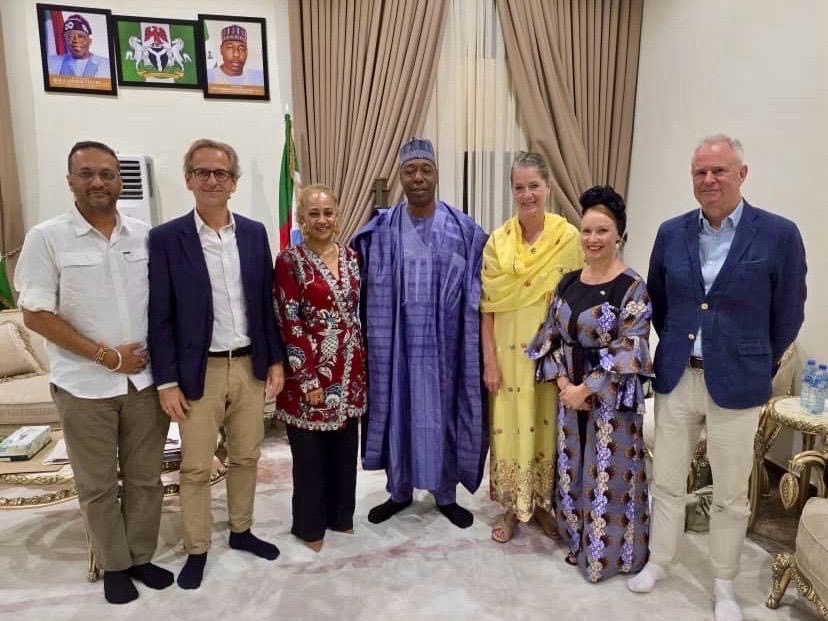
Abuja, November 20, 2025 – A high-level delegation of international partners has visited Borno State to hear first-hand from communities affected by conflict and to strengthen joint efforts aimed at ensuring safe, voluntary, and sustainable returns for displaced populations across Nigeria’s North-East.
According to a news statement from the British High Commission in Nigeria the delegation included the Head of Development Cooperation at the commission in Abuja, alongside the Ambassadors of Denmark, Finland, Germany, the Netherlands, and the UNHCR Representative to Nigeria.
The delegation held strategic engagements with the Borno State Governor, Professor Babagana Umara Zulum, and the Military Commanding Officer in Banki Garrison.
Their discussions focused on supporting the Borno State Government’s plans to enable internally displaced persons (IDPs), refugee returnees, and host communities to make free and informed decisions about where to rebuild their lives.
The partners also examined how government agencies, security forces, and international organisations can collaborate to ensure that all returns and resettlement processes uphold safety, dignity, and adequate support.
In addition to high-level meetings, the delegation visited several project sites to speak directly with beneficiaries and observe ongoing recovery and resilience initiatives.
At El Miskin IDP camp and Musari community in Maiduguri, they engaged displaced women and families participating in livelihood and education programmes.
A major highlight of the visit was a tour of Banki, a garrison town in Bama Local Government Area severely impacted by the insurgency. The group inspected several resilience-focused projects supported by international partners to stabilise the community and improve living conditions.
Speaking during the mission, Ms Cynthia Rowe, Head of Development Cooperation at the British High Commission, reaffirmed the UK’s enduring commitment.
“The United Kingdom remains steadfast in its support for Nigeria’s efforts to build lasting peace and stability in the North-East.
“Our partnership is rooted in a shared commitment to security, dignity, and opportunity for all communities affected by conflict and displacement.
“Through collaborative initiatives like those in Borno, we are helping to lay the foundations for recovery, resilience, and hope,”she said.
Throughout the visit, international partners reiterated their continued commitment to supporting the Government of Nigeria in addressing the needs of displaced and vulnerable populations through peacebuilding initiatives, humanitarian response, and long-term development assistance.
The statement also recalled that Nigeria’s humanitarian crisis continues to deepen.
Nationwide, 34 million people are at risk of acute food insecurity, while nearly six million in the North-East alone are already in crisis.
Malnutrition has reached critical levels, with over 1,000 children under five at risk of dying every day over the next 90 days without urgent intervention.
Worsening insecurity and climate-related shocks continue to uproot communities, while funding cuts have strained life-saving operations.
Through its 45 million euro humanitarian programme, the UK is working with partners including WFP, UNICEF, and local organisations to deliver food assistance, treat severe malnutrition, safeguard civilians, and maintain essential supply routes.
Despite these efforts, the needs remain vast, prompting the UK to intensify support to help Nigeria reduce vulnerabilities and build long-term resilience because, quite simply, lives depend on it.


Leave a Reply